Empathic Edge Negotiation Training: Where Communication Skills Meet Real-World Practice

Meg Smith
June 17, 2026
As an attorney, mediator, educator, and founder of Empathic Edge, I have spent the past several years teaching communication, negotiation, and dispute resolution skills. I have worked with law students, attorneys, business professionals, and leaders. Across all of these groups, I noticed a consistent pattern.
People often understood the theories and concepts. They knew the principles of active listening and understood the importance of empathy. They could explain negotiation frameworks and communication strategies with ease. But when they found themselves in a high-pressure conversation, those skills seemed to disappear.
The gap between knowledge and practice wasn’t because they were unprepared. It was because they were unpracticed. That realization became the foundation for Empathic Edge.
My team and I built Empathic Edge because the real-world conversations that shape careers, businesses, and relationships should not be the first time someone practices their communication skills.
What Is Empathic Edge Negotiation Training?
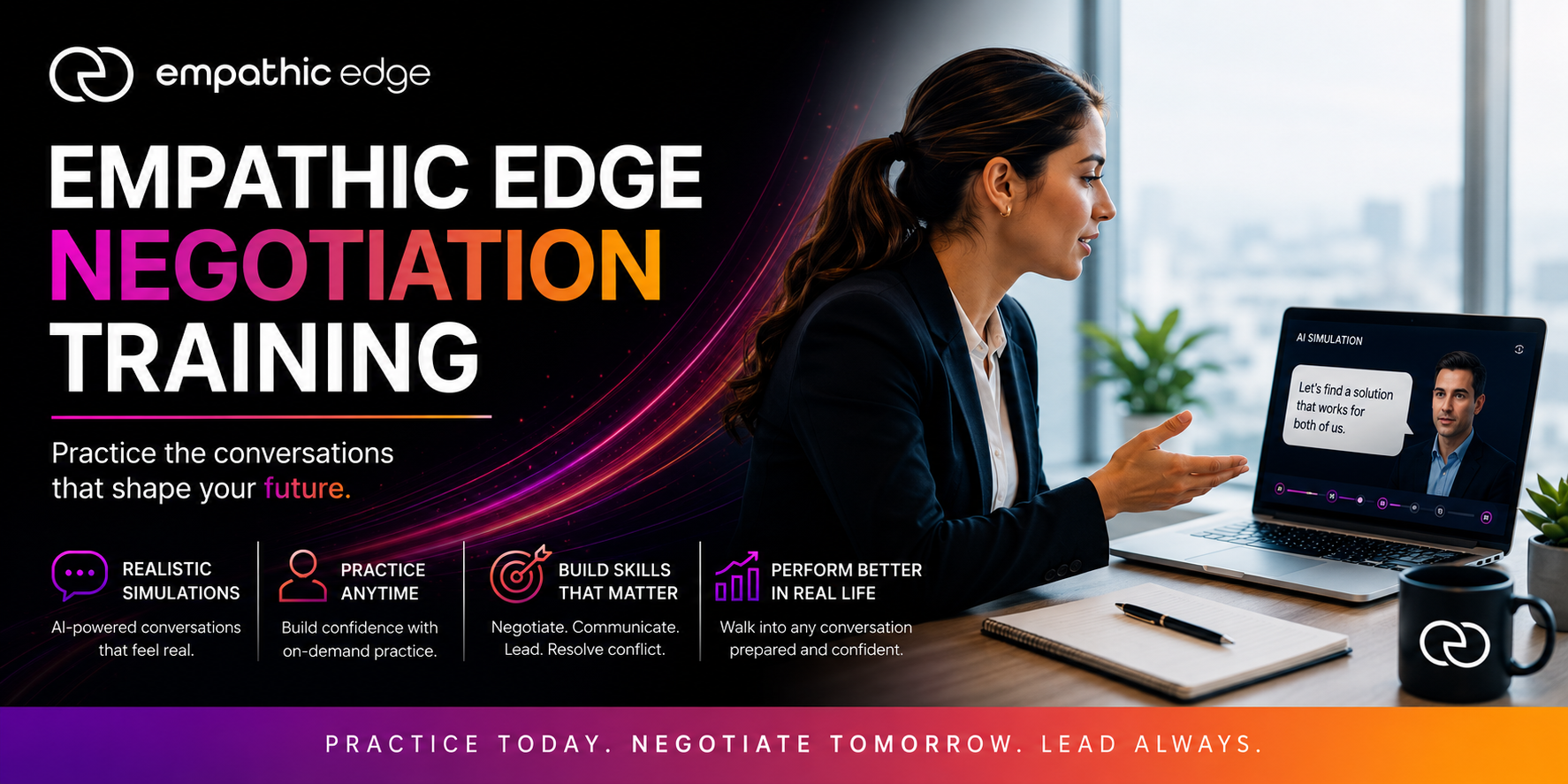
Empathic Edge negotiation training is an AI-powered practice platform that helps users develop real-world communication skills. Our platform uses realistic, interactive role play scenarios that are repeatable. Unlike other learning models that focus on information, Empathic Edge focuses on application.
Empathic Edge users engage in dynamic scenarios and conversations designed to strengthen:
- Active listening
- Negotiation skills
- Perspective-taking
- Conflict resolution
- Emotional awareness
- Difficult conversations
- Leadership communication
The goal is simple: Help people be more effective communicators by giving them opportunities to practice.
Empathic Edge negotiation training combines theory and concepts with realistic practice. This helps users build confidence and perform more effectively when real-world scenarios arise.
The Problem With Traditional Negotiation Training
Traditional negotiation education is a fantastic way to build foundational knowledge. The challenge is that knowledge alone rarely creates mastery, especially in situations involving communication, emotions, and personality traits. In my experience, traditional training experiences follow a similar format:
- Participants attend a workshop.
- They learn a framework.
- They discuss concepts.
- They complete an exercise.
- Then they return to their everyday lives.
Weeks later, these same participants struggle to apply what they learned in the heat of the moment. This is not a failure of the training. Rather, it is a reflection of how skill development actually works.
Communication, negotiation, and leadership are performance skills. And we know that performance skills improve through repetition, practice, and feedback. No one expects an athlete to improve after just one session. Unfortunately, that is often how communication training is delivered.
Why Knowing Isn’t the Same as Doing
One of the most valuable lessons I have learned through my countless mediation sessions is that understanding a concept and executing it under pressure are two very different things. Most people know concepts like:
- Staying calm during conflict
- Listening actively
- Asking thoughtful questions
- Avoiding assumptions
- Focusing on interests rather than positions
The challenge is applying those concepts when emotions are high and stakes are real. The gap between knowing and doing is greatest during situations like:
- A difficult client conversation.
- Workplace conflict.
- A negotiation competition.
- A leadership challenge.
- High-value business negotiations.
Pressure changes behavior, and that is why practice matters.
Communication skills improve when people repeatedly practice realistic conversations, not simply when they learn communication concepts.
How Empathic Edge Works
Empathic Edge was designed around a simple belief: People need more opportunities to practice important conversations. What’s more, I believe that people need a safe way to practice conversations and respond to feedback before the stakes are highest.
Our platform uses AI-powered role play scenarios that allow users to engage in realistic interactions that mirror the challenges they face in everyday life. Rather than simply reading about communication strategies, users actively apply them. Rather than discussing negotiation skills, users practice them. Rather than waiting for real-world opportunities to arise, users can develop skills on demand – anytime, anywhere.
The Empathic Edge experience is designed to feel conversational, dynamic, and practical. Because that is how real communication is. No two conversations are exactly alike, and no two people are exactly alike. That’s why practice matters so much.
Want to Practice Before the Stakes Are Real?
Empathic Edge helps students, attorneys, leaders, educators, and professionals strengthen communication and negotiation skills through realistic AI-powered simulations.
Try it free today and start practicing the conversations that matter most.
The Skills Users Actually Build
One of the things I love most about communication training is that the benefits extend far beyond a single conversation. Strong communication skills influence so many aspects of personal and professional success. Through Empathic Edge negotiation training, users develop and master skills such as:
- Active Listening: The ability to understand other perspectives before responding.
- Negotiation: Finding productive solutions while balancing competing interests.
- Conflict Resolution: Navigating disagreements while maintaining relationships.
- Leadership Communication: Building trust, alignment, and accountability.
- Emotional Intelligence: Recognizing and managing emotions during conversations.
- Perspective-Taking: Understanding viewpoints that differ from your own.
Communication success depends on being able to apply these skills during difficult conversations where the results matter.
Who Benefits From Empathic Edge?
One reason I am passionate about negotiation and conflict resolution is because communication skills are universally valuable. Different users bring different goals to the conversation, but the underlying goal remains the same: they want to perform better when conversations matter.
That’s why we are continuing to develop Empathic Edge into a platform that is applicable and useful for:
- Law Students: Law students use Empathic Edge to prepare for negotiation courses, competitions, clinics, interviews, and future legal practice.
- Attorneys: Attorneys strengthen client communication, negotiation strategy, mediation skills, and leadership development.
- Business Professionals: Professionals improve workplace communication, conflict resolution, and collaboration.
- Educators: Educators gain practical tools for teaching communication, negotiation, and professional development skills.
- Leaders: Leaders develop the communication skills necessary to guide teams, manage change, and build trust.
Why AI Changes the Learning Experience
Many people hear “AI” and assume the goal of artificial intelligence is to replace human interaction. That is not our philosophy. Empathic Edge utilizes AI as a tool to create more opportunities for human skill development.
Our platform is not designed to replace conversations. It is designed to help users become better at them.
Historically, communication practice has been difficult to scale. That’s because people needed partners, instructors, schedules, and structured exercises in order to practice. AI changes that. Using AI to build Empathic Edge provides opportunities for practice in an accessible and repeatable format that is and available when users need it.
That is powerful. Communication skills improve through experience and experience requires opportunities to engage.
Ready to Build Stronger Communication and Negotiation Skills?
The conversations that shape our lives rarely arrive with warning.
- A negotiation opportunity.
- A leadership challenge.
- A difficult conversation.
- A client meeting.
- A conflict that needs resolution.
The individuals who excel in these moments are not typically the ones who have read the most books or attended the most workshops. In my experience, they are the individuals who have practiced the most.
That is what Empathic Edge is designed to provide. Not just information - Experience. Because communication, negotiation, and leadership skills we master through practice.
Try Empathic Edge today and discover a smarter way to practice the conversations that shape your future.
Meg Smith
Founder, Empathic Edge
Meg is a licensed attorney, certified mediator, and educator with years of experience helping people navigate high-stakes conversations. She founded Empathic Edge to make practical negotiation and communication skills accessible to everyone — from law students preparing for the bar to professionals navigating workplace challenges.
Featured Articles

The Skill Gap Nobody Talks About: Why Communication Skills Training Needs Practice
Effective communication requires more than knowing the right techniques. Explore why communication skills training benefits from realistic practice to help students and professionals build skills they can use when conversations matter most.

Why Smart People Are Often the Worst Listeners
Being smart and experienced doesn't always make us better listeners. In this blog, Meg Smith explores the difference between listening to confirm and listening to discover, and why curiosity can lead to better conversations and outcomes.

Empathic Edge Enters a New Chapter: Design Partnerships Bring AI-Powered Practice Into the Classroom
Empathic Edge is entering a new chapter with Design Partnerships that bring AI-powered simulations into law school classrooms, clinics, and advocacy programs. These partnerships give students more opportunities to practice the skills they need in real-world conversations.
Ready to Put These Ideas Into Practice?
Try Empathic Edge and practice a conversation that matters to you.