National Recognition for Innovation: How Empathic Edge Is Helping Shape the Future of Legal Education

Meg Smith
June 26, 2026
The legal profession is changing faster than ever. Artificial intelligence (AI) is transforming how law students and attorneys research, write, and negotiate. As these technologies become part of everyday legal practice, law schools face an important challenge: preparing students not only to understand AI, but to use it responsibly. This challenge must coincide with encouraging students to develop the human skills technology can’t replace.
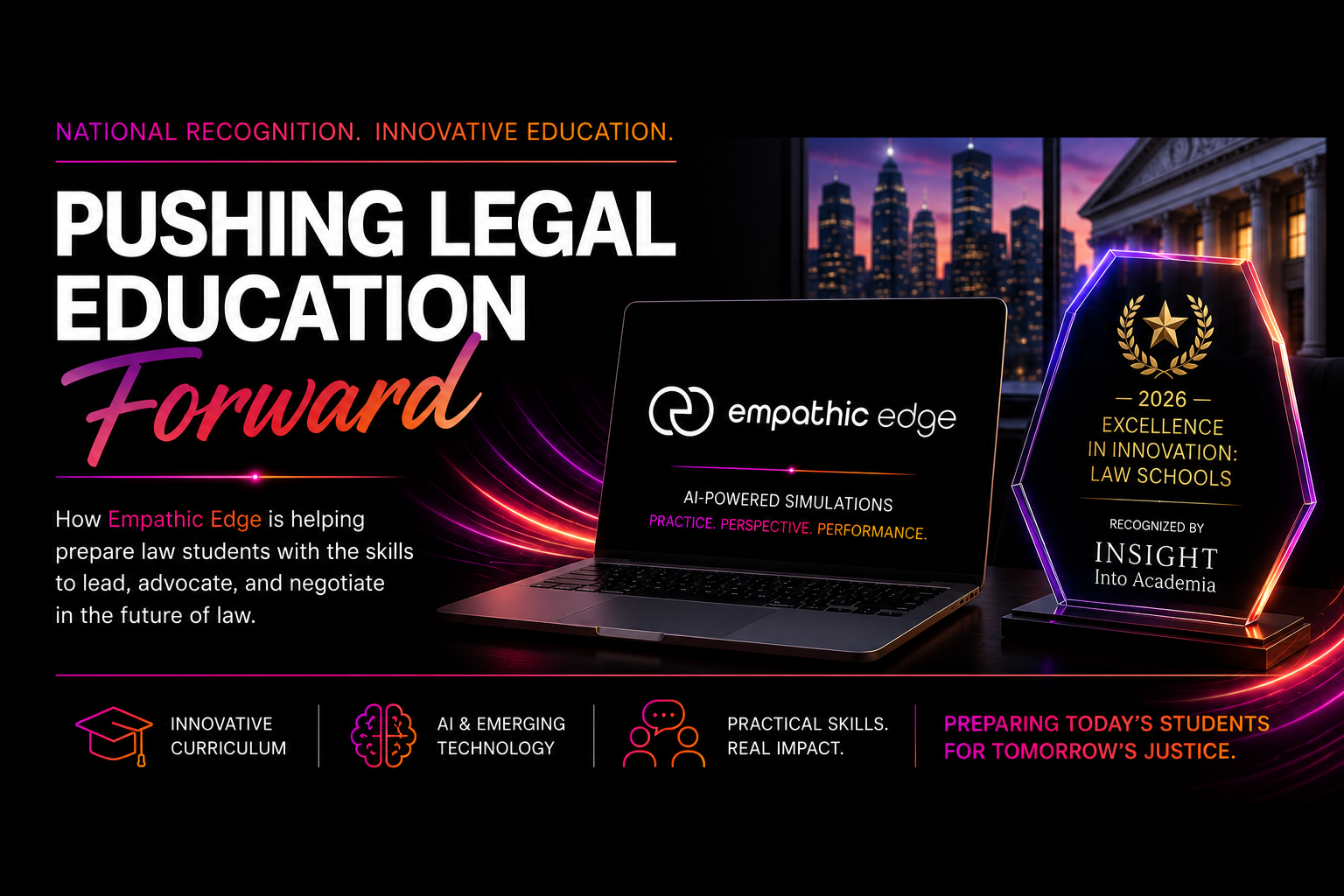
That’s why I’m incredibly proud to share that the University of Houston Law Center has been recognized among the 2026 Excellence in Innovation: Law Schools by Insight Into Academia. The national recognition celebrates law schools that are redefining legal education through innovation, experiential learning, and the thoughtful integration of AI technologies into the student experience.
It’s an exciting milestone for the UHLC, and an exciting moment for the future of legal education.
A Shared Vision for the Future of Legal Education
The UHLC is being recognized for its hands-on approach to integrating AI throughout its curriculum. Rather than shying away from emerging technology, UHLC is embracing it and encouraging responsible use. From courses where students build legal technology applications to advanced seminars incorporating AI into legal research and writing, the program reflects a commitment to preparing future attorneys for a rapidly evolving profession.
I am especially honored that Empathic Edge was highlighted as part of that effort.
As co-director of the Alternative Dispute Resolution Program, I developed Empathic Edge to bridge the gap between theory and practice. Empathic Edge is an AI-powered interactive learning platform that allows students to practice negotiation, client counseling, conflict resolution, and other critical interpersonal skills through realistic role play scenarios.
Earlier this year, the platform also received the Innovation in Advocacy Education Award from Syracuse University College of Law – which is another reminder that experiential learning is the key to innovating legal education.
Why Communication Skills Matter More Than Ever
One of the biggest misconceptions about AI is that it will replace the need for human interpersonal skills. I believe the opposite is true. As AI becomes more capable of handling research and drafting, the skills that distinguish exceptional attorneys become even more valuable. Those skills include:
- Negotiation
- Active listening
- Client counseling
- Conflict resolution
- Empathic communication
- Professional judgment
These aren’t skills students develop just by reading textbooks. These skills are best developed through experience.
The future of legal education is not just about learning new technology. It is also about giving students more opportunities to practice the skills that technology cannot replace.
Bridging the Gap Between Learning and Practice
Throughout my career, there’s one theme that has repeated over and over. Students understand communication concepts and principles, but they struggle to utilize those skills in real conversations. That observation became the foundation for Empathic Edge.
Rather than simply teaching theories and concepts, our platform provides opportunities for students to practice conversations in realistic, AI-powered role play scenarios. Students receive repeated opportunities to address communication habits, build confidence, and develop the interpersonal skills that will carry them through school and into their legal careers.
Attorneys will always need to build trust, communicate effectively, negotiate thoughtfully, and advocate for their clients. Those human skills remain at the heart of great lawyering. AI can be an effective tool to help improve these skills, not replace them.
My hope is that Empathic Edge helps students develop these important skills before they’re sitting across from a client, negotiating a settlement, or navigating a difficult conversation for the first time.
Why I Love Being Part of the Merge Between Law and Technology
I’m honored that Empathic Edge was recognized as part of the University of Houston Law Center’s national innovation award, but what excites me most isn’t the recognition itself. It’s what it represents.
Legal education is evolving, and experiential learning is becoming more accessible. Students now have more opportunities to build the communication and negotiation skills that will define their careers. I’m so grateful to be part of that journey and I’m excited to continue helping shape the future of legal education - one conversation at a time.
Want to Try Experience Empathic Edge For Yourself?
Whether you’re a law student preparing for negotiations, an educator looking to expand experiential learning opportunities, or a legal professional sharpening your communication skills, Empathic Edge provides a practical way to practice before the stakes are real.
Try Empathic Edge free and discover how our platform can help you build confidence, strengthen communication, and prepare for the conversations that matter most.
Meg Smith
Founder, Empathic Edge
Meg is a licensed attorney, certified mediator, and educator with years of experience helping people navigate high-stakes conversations. She founded Empathic Edge to make practical negotiation and communication skills accessible to everyone — from law students preparing for the bar to professionals navigating workplace challenges.
Featured Articles

The Skill Gap Nobody Talks About: Why Communication Skills Training Needs Practice
Effective communication requires more than knowing the right techniques. Explore why communication skills training benefits from realistic practice to help students and professionals build skills they can use when conversations matter most.

Why Smart People Are Often the Worst Listeners
Being smart and experienced doesn't always make us better listeners. In this blog, Meg Smith explores the difference between listening to confirm and listening to discover, and why curiosity can lead to better conversations and outcomes.

Empathic Edge Enters a New Chapter: Design Partnerships Bring AI-Powered Practice Into the Classroom
Empathic Edge is entering a new chapter with Design Partnerships that bring AI-powered simulations into law school classrooms, clinics, and advocacy programs. These partnerships give students more opportunities to practice the skills they need in real-world conversations.
Ready to Put These Ideas Into Practice?
Try Empathic Edge and practice a conversation that matters to you.