The Future of Negotiation Skills Training: AI-Powered Practice Platforms Explained

Meg Smith
April 24, 2026
Negotiation skills training is undergoing a fundamental shift. For decades, professionals relied on workshops, static role play, and theoretical frameworks to improve their negotiation abilities. But today, a new generation of tools is emerging.
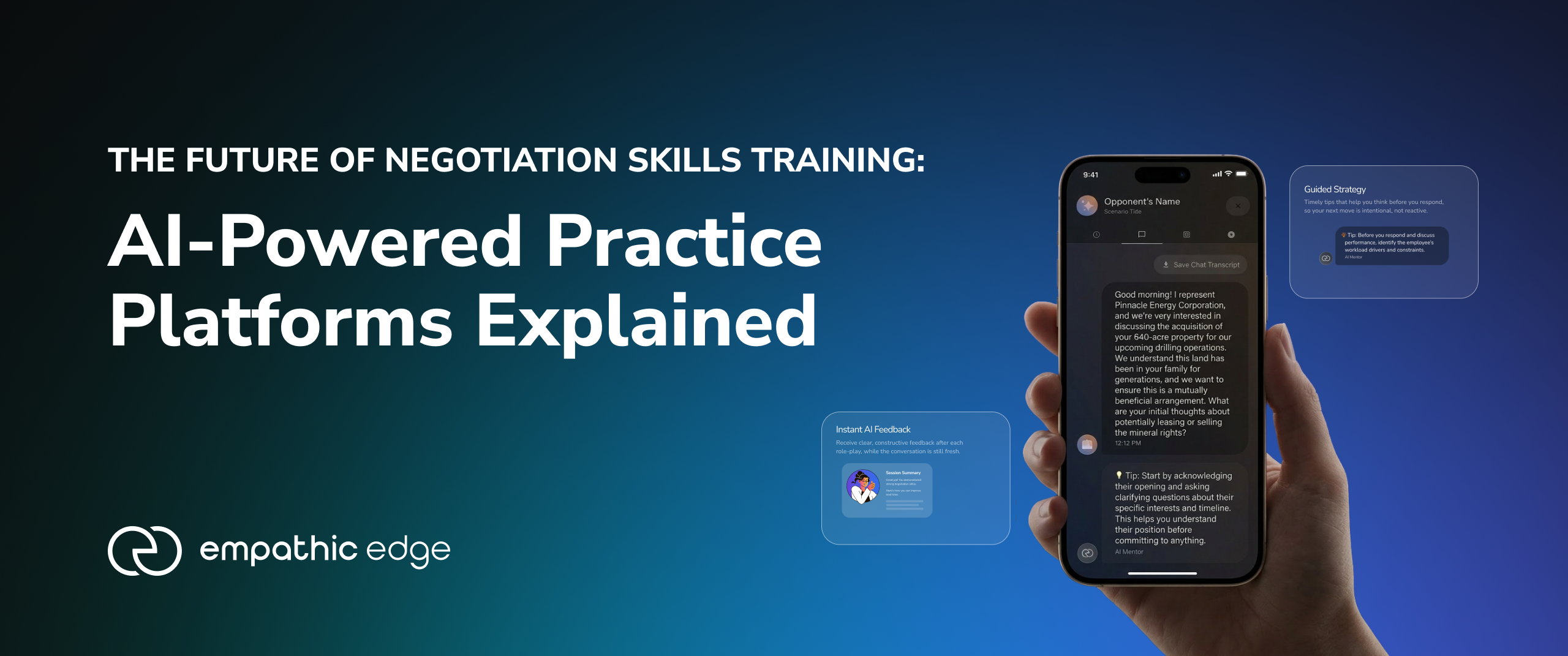
Empathic Edge is one of these tools. Our platform is powered by artificial intelligence, real-time feedback, and immersive simulations. Our platform is changing how people learn, practice, and master negotiation. Using innovative tools and technology, Empathic Edge is setting a new standard for what effective negotiation skills training looks like.
Why Traditional Negotiation Skills Training Is No Longer Enough
Traditional training methods still have value, but they come with some clear limitations:
Limited opportunities for real practice
Static, predictable role-play scenarios
Delayed or inconsistent feedback
Difficulty replicating real-world pressures
Negotiation is dynamic. Human behavior is unpredictable. Emotions shift in real time. Static training simply can’t replicate that complexity. That’s why organizations are turning to AI-powered solutions like Empathic Edge.
What Are AI-Powered Negotiation Training Platforms?
AI-powered negotiation platforms – including Empathic Edge - use machine learning and conversational AI to simulate realistic situations. Instead of reading about negotiation, users actively engage in conversations with intelligent systems that respond dynamically, mimicking how a real person would respond.
AI-based platforms typically offer:
Real-time, adaptive conversations
Scenario-based simulations (sales, conflict, leadership)
Instant feedback on performance
Analytics to track improvement over time
The result is a more immersive and effective learning experience.
Real Examples of AI Negotiation Training Platforms
The shift to AI-based training isn’t theoretical. It’s already happening across industries. Several platforms are leading the way. Platforms like Conversity and LavenirAI use AI avatars to simulate realistic negotiation scenarios. Mursion blends AI with human insight to create immersive role-play scenarios for difficult conversations.
Empathic Edge is an AI-powered practice platform that puts you in realistic conversations. We use situations like negotiations, feedback sessions, and conflict scenarios so you can build communication skills through experience. With dynamic simulations grounded in empathy and negotiation theory, it helps you develop clarity, perspective-taking, and emotional control in the moments that matter most.
These systems emphasize behavioral training that helps users refine how they communicate, rather than just what they say.
Key Features Defining the Future of Negotiation Skills Training
There are a few defining features shaping the future of negotiation skills training:
Real-Time Adaptation: AI responds dynamically to user input, creating conversations that feel natural and unpredictable.
Safe Practice Environments: Users can test strategies without risking real-world consequences. This is a major advantage over live negotiations.
Immediate Feedback: AI evaluates performance instantly, helping users identify strengths. It can also provide coaching on areas for improvement.
Repetition and Skill Building: Users can practice the same scenario multiple times, refining their approach with each attempt.
Emotional Intelligence Training: Advanced platforms like Empathic Edge analyze tone, empathy, and communication style.
Why This Shift Matters
The evolution toward AI learning isn’t just about technology. It’s also about effectiveness. Research and industry insights show that:
Practice-based learning leads to stronger skill retention
Immediate feedback accelerates improvement
Realistic simulations better prepare users for actual conversations
AI-powered platforms bring all three together. They transform negotiation skills training from passive learning to active skill development.
Where Most Platforms Still Fall Short
Despite their innovation, many existing tools have limitations. There is frequently an overemphasis on tactics rather than human connection. This results in less focus on empathy and emotional nuance, and more focus on simple outcomes. Rigid or scripted interaction models also lack true conversational depth.
In other words, they simulate negotiation, but don’t always capture the human experience of conversation. And that’s where the next evolution is happening.
Introducing the Next Generation: Empathic Edge
Empathic Edge builds on everything these platforms do well, but pushes learning a step further. Instead of focusing solely on strategy or outcomes, Empathic Edge centers on how conversations actually unfold in real-life scenarios. Our platform places users inside realistic, dynamic interactions like:
Client negotiations
Difficult feedback conversations
Workplace conflict resolution
Through AI-guided simulations rooted in empathy and negotiation theory, Empathic Edge users develop:
Perspective-taking skills
Emotional control under pressure
Clear, effective communication
Real conversational confidence
Unlike traditional tools, Empathic Edge doesn’t just simulate negotiation scenarios, it helps you build the human skills that drive successful outcomes.
The Future Is Practice-Driven, Personalized, and Human-Centered
As AI continues to evolve, negotiation skills training must become more personalized, immersive, and more focused on real-world application. Empathic Edge is helping us moving toward a future where:
Everyone has access to a personal negotiation coach.
Practice is unlimited and on-demand.
Feedback is immediate and actionable.
And most importantly, it is moving us toward a platform where individuals can prepare for critical conversations before they happen.
Are You Ready to Evolve Your Communication Skills?
The future of negotiation skills training isn’t about memorizing tactics. It’s about experience. AI-powered platforms are redefining how we learn by making practice realistic, repeatable, and measurable.
Empathic Edge gives you a safe space to sharpen your negotiation and communication skills through our realistic, AI-powered role play scenarios. Join the beta today and start building confidence before the stakes are real.
Meg Smith
Founder, Empathic Edge
Meg is a licensed attorney, certified mediator, and educator with years of experience helping people navigate high-stakes conversations. She founded Empathic Edge to make practical negotiation and communication skills accessible to everyone — from law students preparing for the bar to professionals navigating workplace challenges.
Featured Articles

The Skill Gap Nobody Talks About: Why Communication Skills Training Needs Practice
Effective communication requires more than knowing the right techniques. Explore why communication skills training benefits from realistic practice to help students and professionals build skills they can use when conversations matter most.

Why Smart People Are Often the Worst Listeners
Being smart and experienced doesn't always make us better listeners. In this blog, Meg Smith explores the difference between listening to confirm and listening to discover, and why curiosity can lead to better conversations and outcomes.

Empathic Edge Enters a New Chapter: Design Partnerships Bring AI-Powered Practice Into the Classroom
Empathic Edge is entering a new chapter with Design Partnerships that bring AI-powered simulations into law school classrooms, clinics, and advocacy programs. These partnerships give students more opportunities to practice the skills they need in real-world conversations.
Ready to Put These Ideas Into Practice?
Try Empathic Edge and practice a conversation that matters to you.